Zero Branch Visits: Digitizing Corporate Client Onboarding
TL;DR
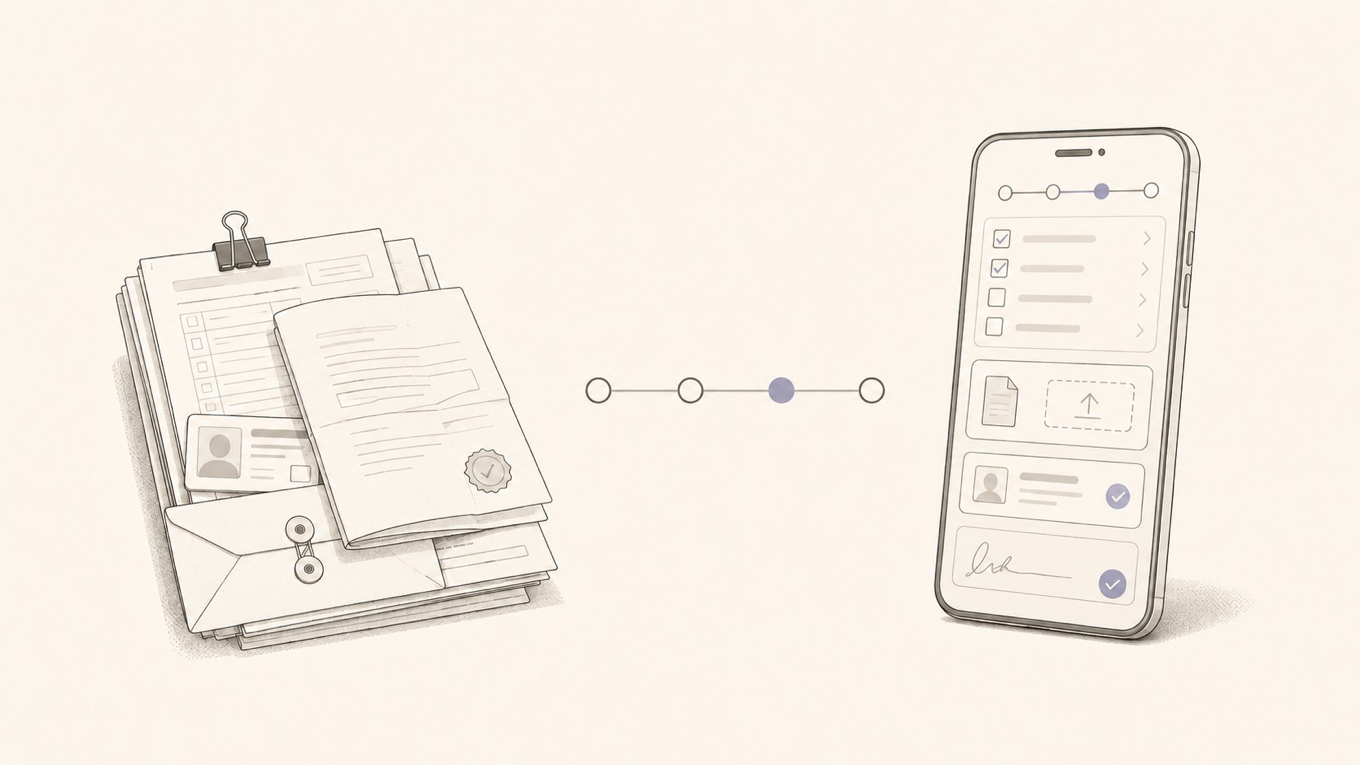
I owned the end-to-end UX design for digitizing corporate client onboarding at an international investment bank operating under Swiss regulation. The process had been entirely manual and branch-dependent — I translated it into a mobile-first experience without changing any compliance logic.
Post-launch, the majority of onboarding cases were completed digitally without branch visits. Completion rates increased substantially, drop-offs during identity verification decreased, and overall processing time was significantly reduced.
Overview
Corporate client onboarding at the bank had long been a manual, paper-based process. Clients were required to visit branches, submit physical documentation, complete in-person identity checks, and exchange contracts by post. The process was compliant, but opaque, slow, and heavily dependent on relationship managers to interpret requirements.
As part of the bank's mobile-first strategy, the objective was to digitize this traditional onboarding journey end-to-end — without altering its underlying compliance logic. The challenge was not simplification of regulation, but translation of regulatory complexity into a clear, predictable, and self-explanatory digital experience for corporate clients.
This became less a digitization exercise and more a systems redesign focused on clarity, sequencing, and cognitive load reduction.
Understanding the System and Constraints
I began by analyzing the existing onboarding system within its Swiss regulatory and operational context. I reviewed compliance documentation and worked closely with relationship managers, compliance officers, and operations teams to understand how the process actually functioned in practice, including informal workarounds and hand-offs that were never documented.
The primary constraint was clear: compliance logic could not change. The design had to preserve legal structure, verification requirements, and documentation standards.
My goal was to identify where ambiguity, fragmented documentation, and unclear responsibility transitions increased cognitive load and led to delays, without challenging the regulatory framework itself.
Researching Users and Cross-Bank Expectations
I conducted interviews with internal bank teams (relationship managers, compliance, operations) and private banking clients who had opened corporate accounts at other institutions.
This cross-bank perspective was critical. It revealed that the core issue was not complexity itself, but misalignment between internal system logic and client mental models.
Key findings:
- There was no consolidated list of onboarding requirements
- Requirements surfaced gradually through advisor conversations
- Clients could not anticipate effort, documentation needs, or timelines
- Uncertainty led to repeated clarification interactions and submission errors
This reframed the problem from “digitizing paperwork” to redesigning clarity, predictability, and requirement visibility.
Defining a Clear Requirements Model
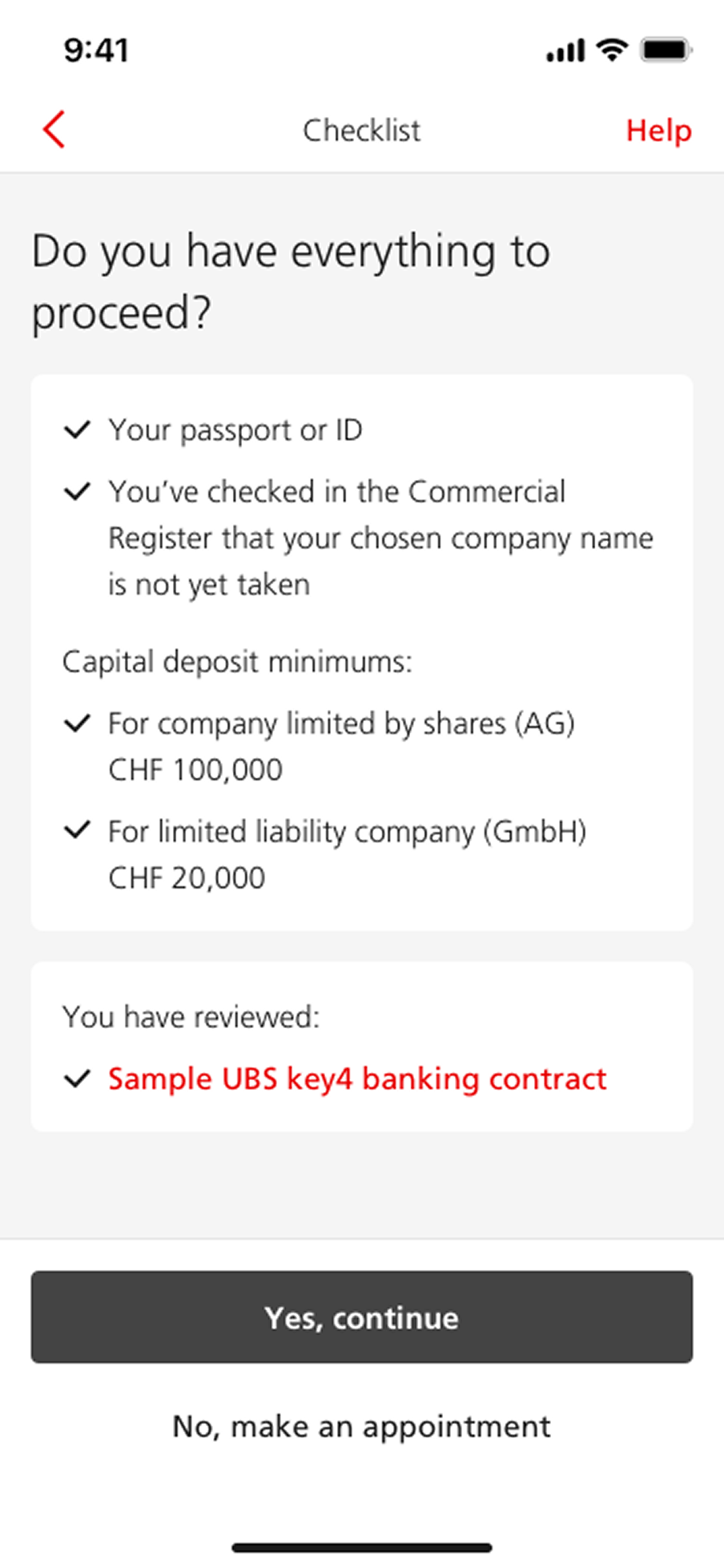
Based on research insights, I consolidated fragmented regulatory and operational requirements into a single, client-facing structure translated into plain language.
Rather than embedding requirements progressively inside the flow, I positioned a complete requirements overview before onboarding began. This allowed clients to:
- Understand total effort upfront
- Prepare documentation in advance
- Reduce dependency on advisor interpretation
- Avoid repeated submission cycles
This shift alone reduced downstream friction and prevented avoidable drop-offs.
Designing the End-to-End Journey (Lo-Fi to Hi-Fi)
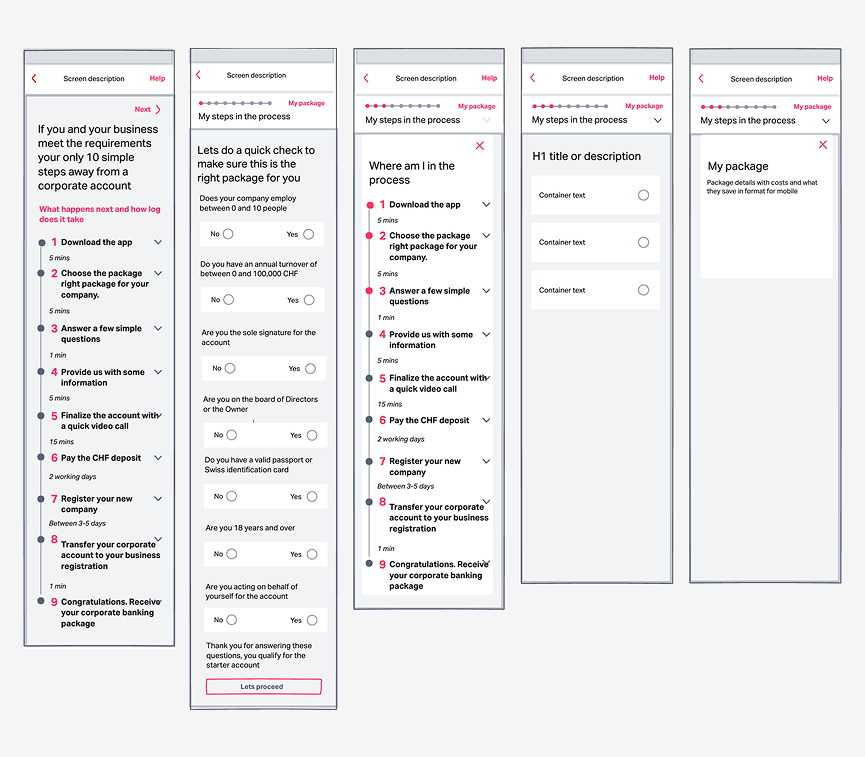
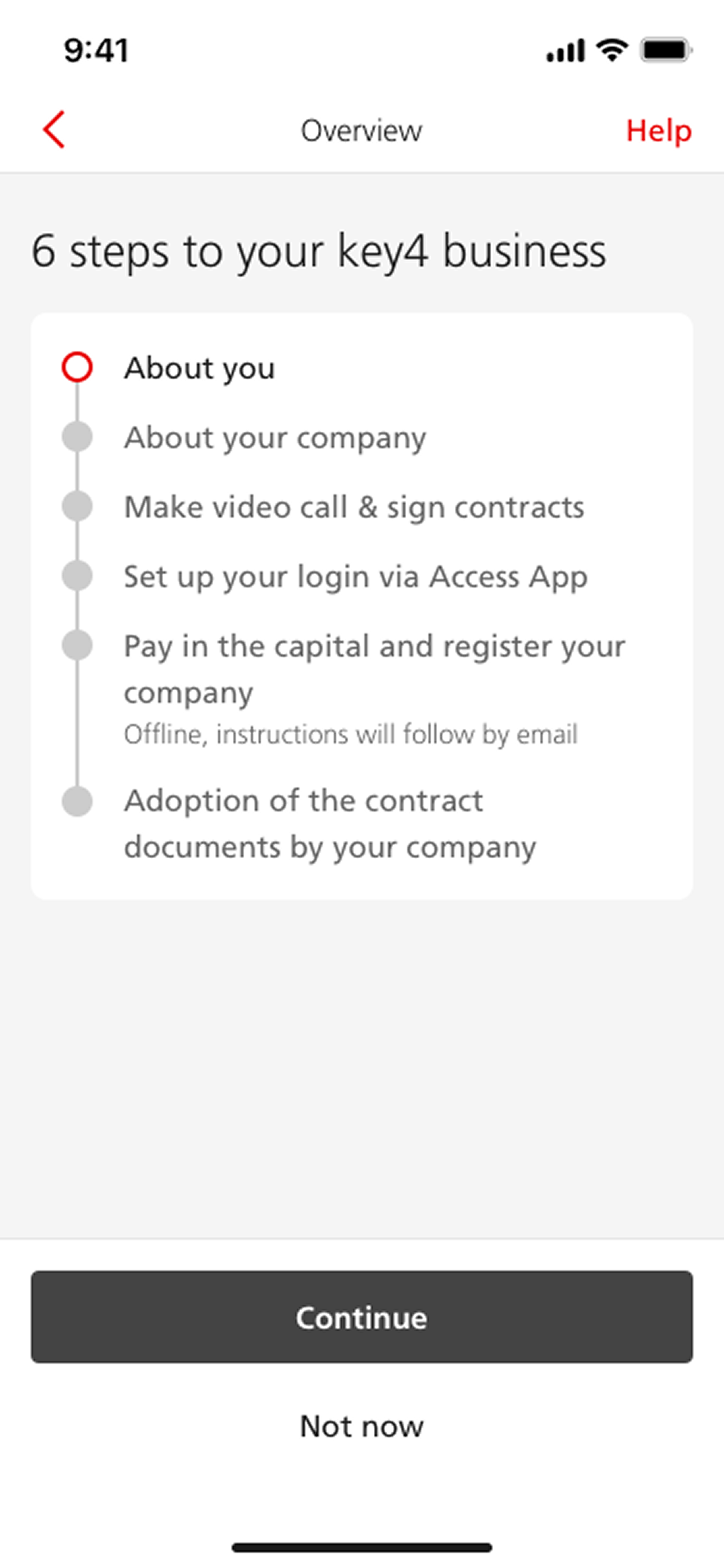
I structured the onboarding journey into clearly defined sequential stages aligned with user expectations and cognitive flow. Each stage explicitly communicated:
- Current status and next steps
- Required client actions
- Expected timeframes
I began with low-fidelity task flows and structural wireframes to validate sequencing and content clarity. These were tested with users and internal stakeholders to refine terminology, eliminate ambiguity, and surface missing edge cases.
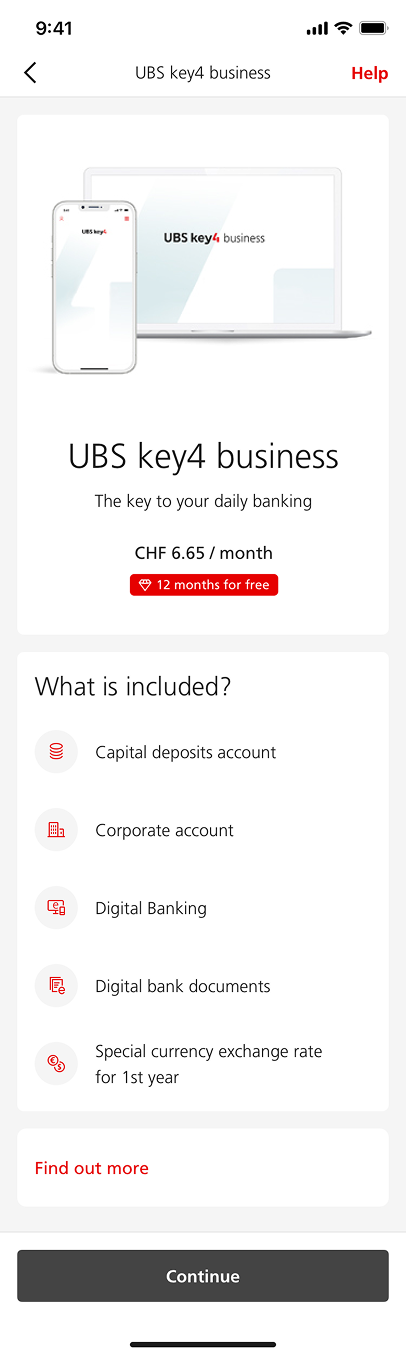
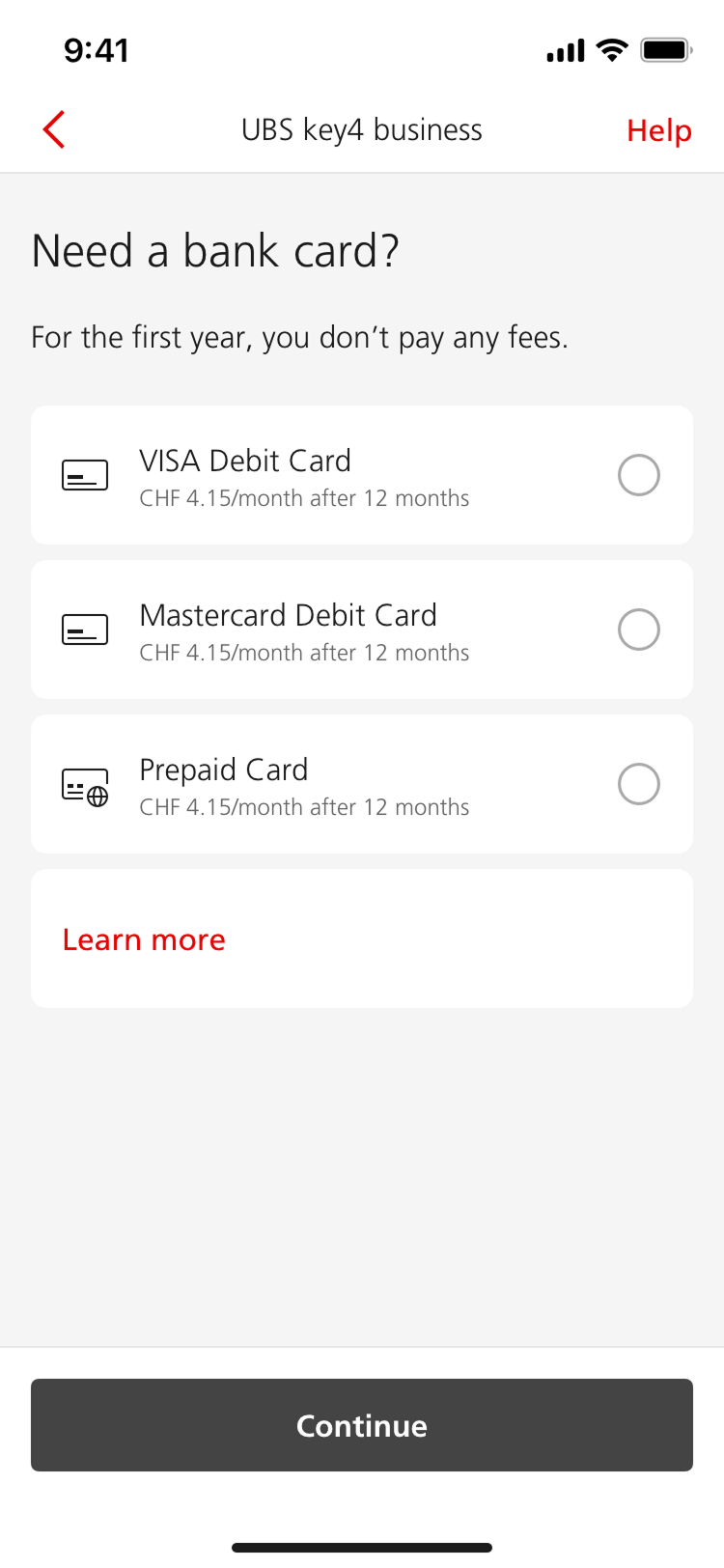
Once structural clarity was validated, we developed high-fidelity designs. Mobile was defined as the primary channel to enable true end-to-end completion without branch dependency.
Digitizing and Validating Critical Interactions
Key moments of the traditional process (remote identity verification and digital contract review with e-signing) were adapted for corporate onboarding.
While these components had already been implemented in private banking, the corporate context introduced greater complexity, particularly in contract review. Corporate agreements were longer, included denser compliance disclosures, and carried higher perceived risk.
Rather than assuming a direct transfer would work, I tested whether these components scaled effectively under:
- Increased content depth
- More complex compliance language
- Elevated risk sensitivity in corporate account setup
I conducted usability testing focusing on comprehension, cognitive load, and trust. Insights led to refinements in content structuring, progress visibility, and confirmation logic to ensure the interactions remained clear, robust, and appropriate for the corporate context.
Trade-offs and Real Constraints
Several constraints shaped the final solution:
- Clarity vs. compliance review cycles — every structural and wording change required validation from compliance, limiting iteration speed and requiring careful alignment between UX clarity and regulatory precision
- Plain language vs. legal & localization accuracy — UX writing had to pass both legal review and localization checks (English, German, Italian, French), with simplification possible only within approved terminology, which required negotiation and multiple review rounds
- Interaction improvements vs. design system limits — high-fidelity designs were constrained by the existing private banking mobile design system; rather than introducing new components, I worked within established patterns, adapting hierarchy and behavior to accommodate increased corporate complexity
These constraints required deliberate prioritization and cross-functional negotiation to ensure timely delivery without compromising regulatory integrity or user comprehension.
Key contributions
- System & constraints analysis — analyzed the existing onboarding system within its Swiss regulatory and operational context, working closely with relationship managers, compliance officers, and legal teams
- Requirements model — consolidated fragmented regulatory and operational requirements into a single, client-facing structure translated into plain language, positioned before onboarding began
- End-to-end journey design — structured the onboarding into clearly defined sequential stages, progressing from lo-fi task flows and wireframes to high-fidelity prototypes
- Concept testing & usability studies — validated designs with users and internal stakeholders across legal, compliance, and customer support
- Cross-functional negotiation — navigated compliance review cycles and localization across English, German, Italian, and French while maintaining UX clarity
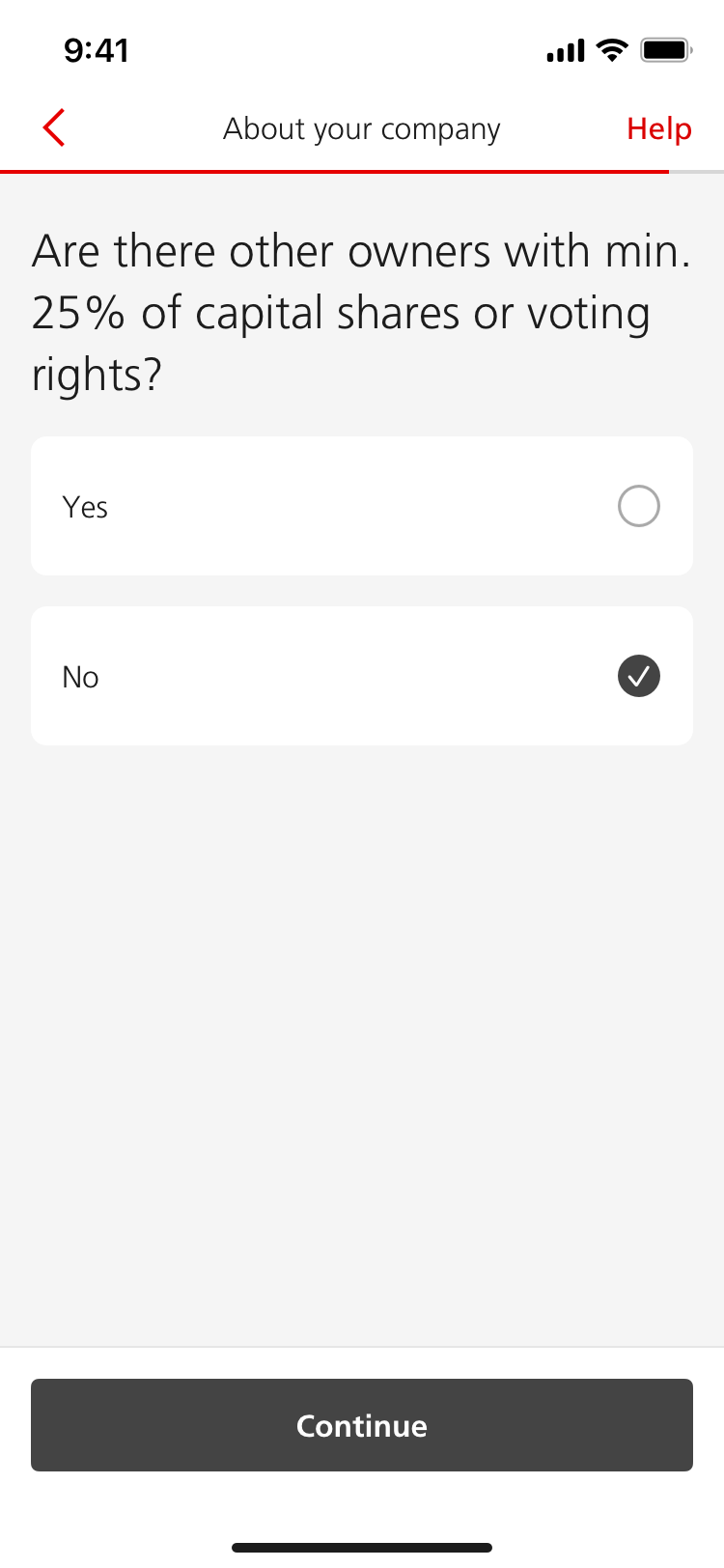
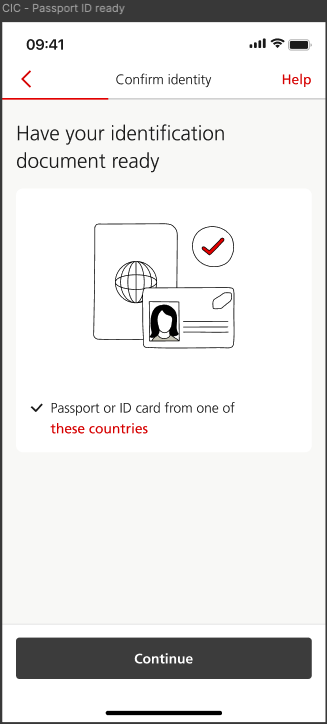
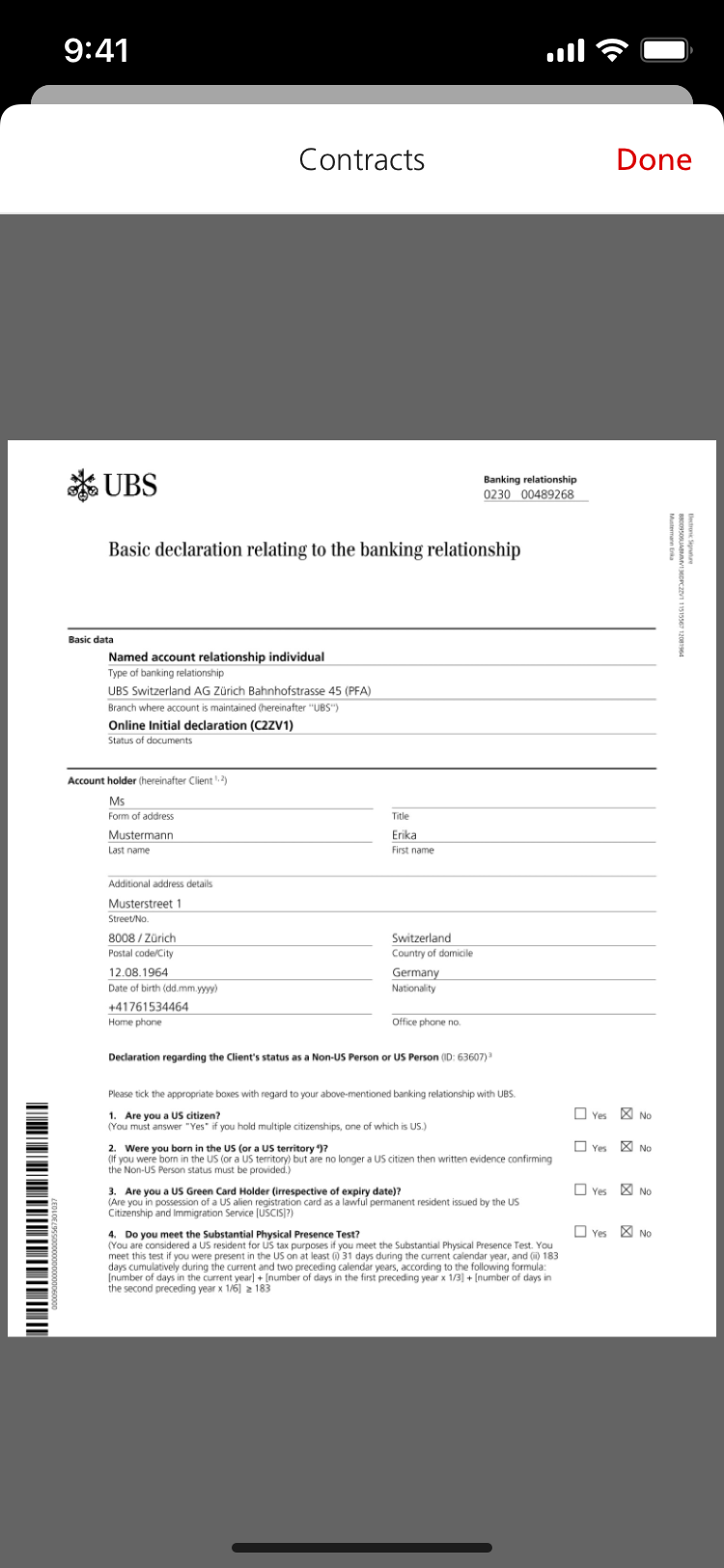
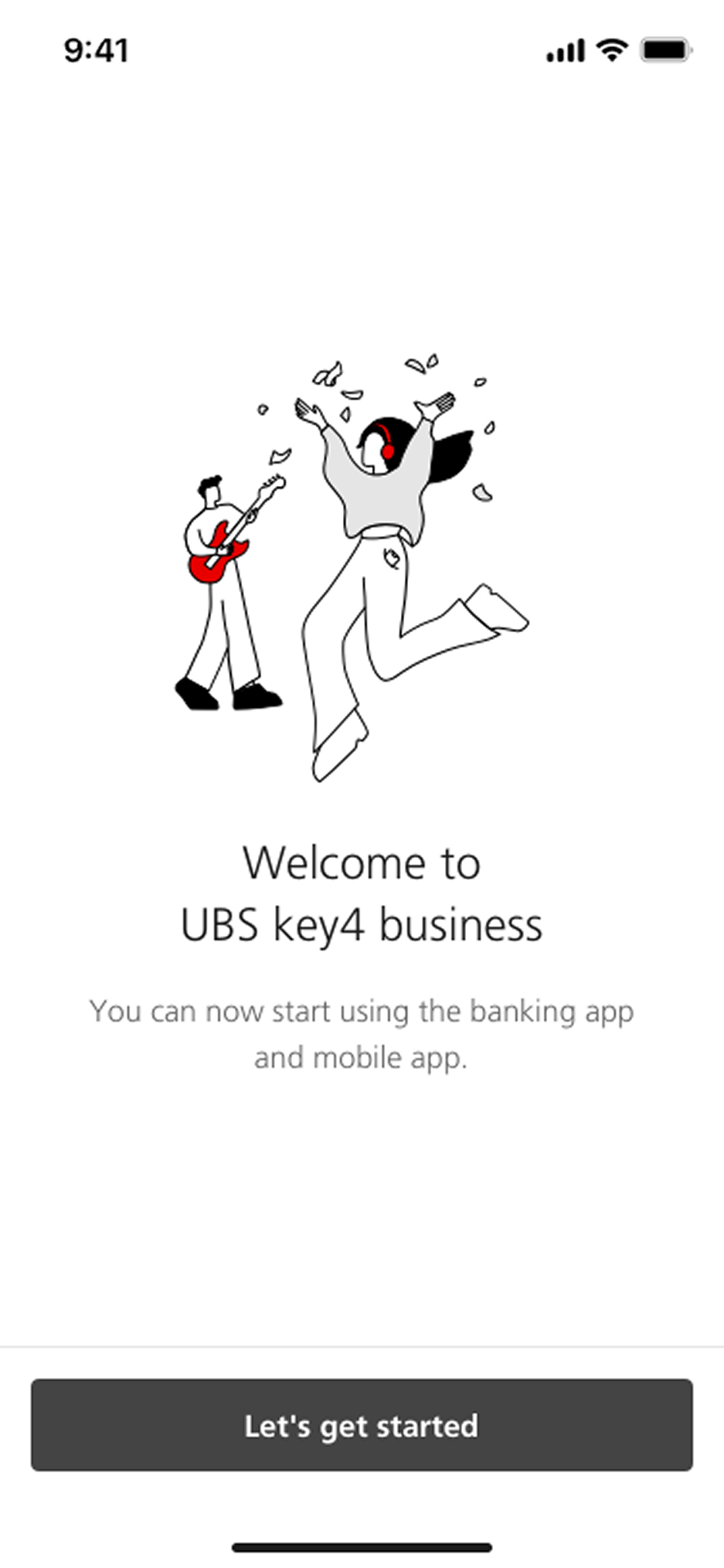
Final Screens
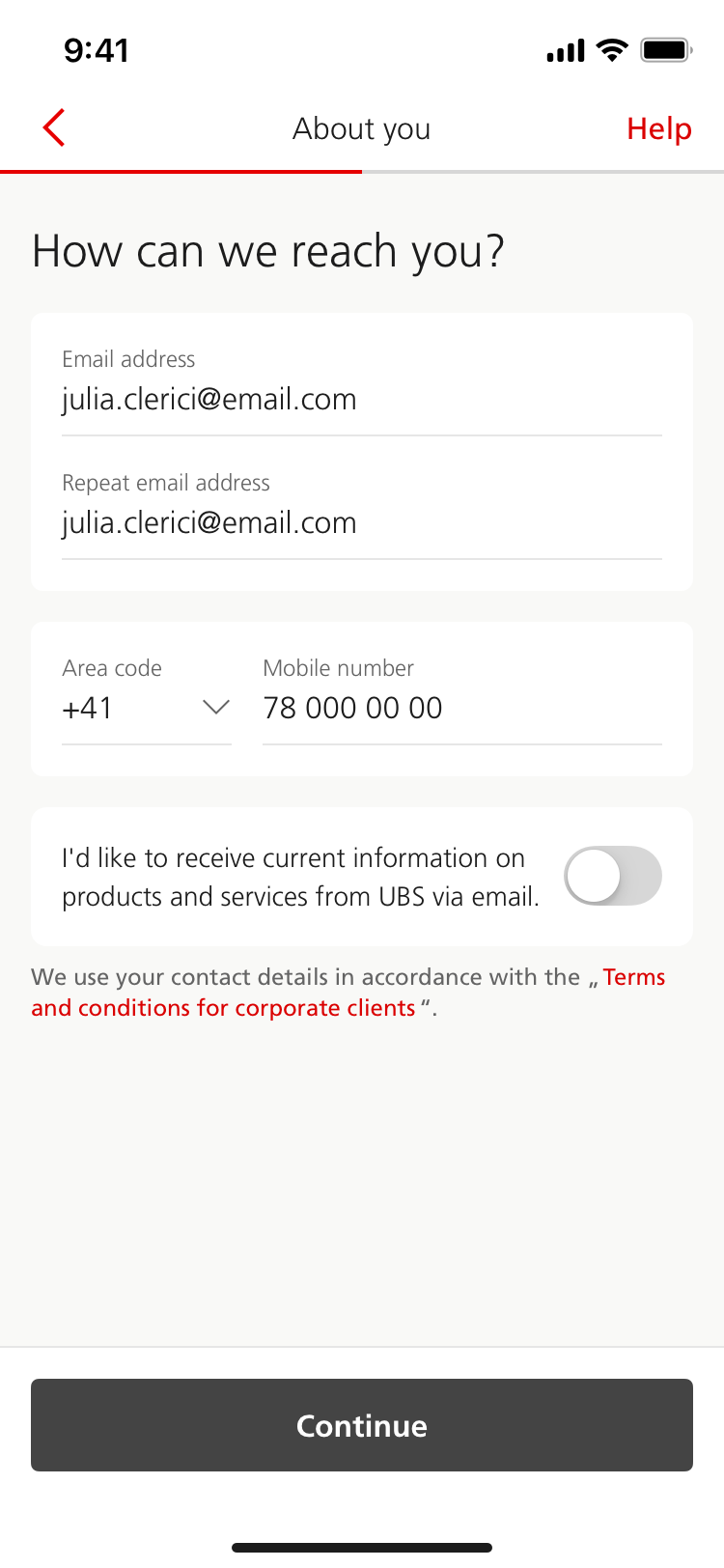
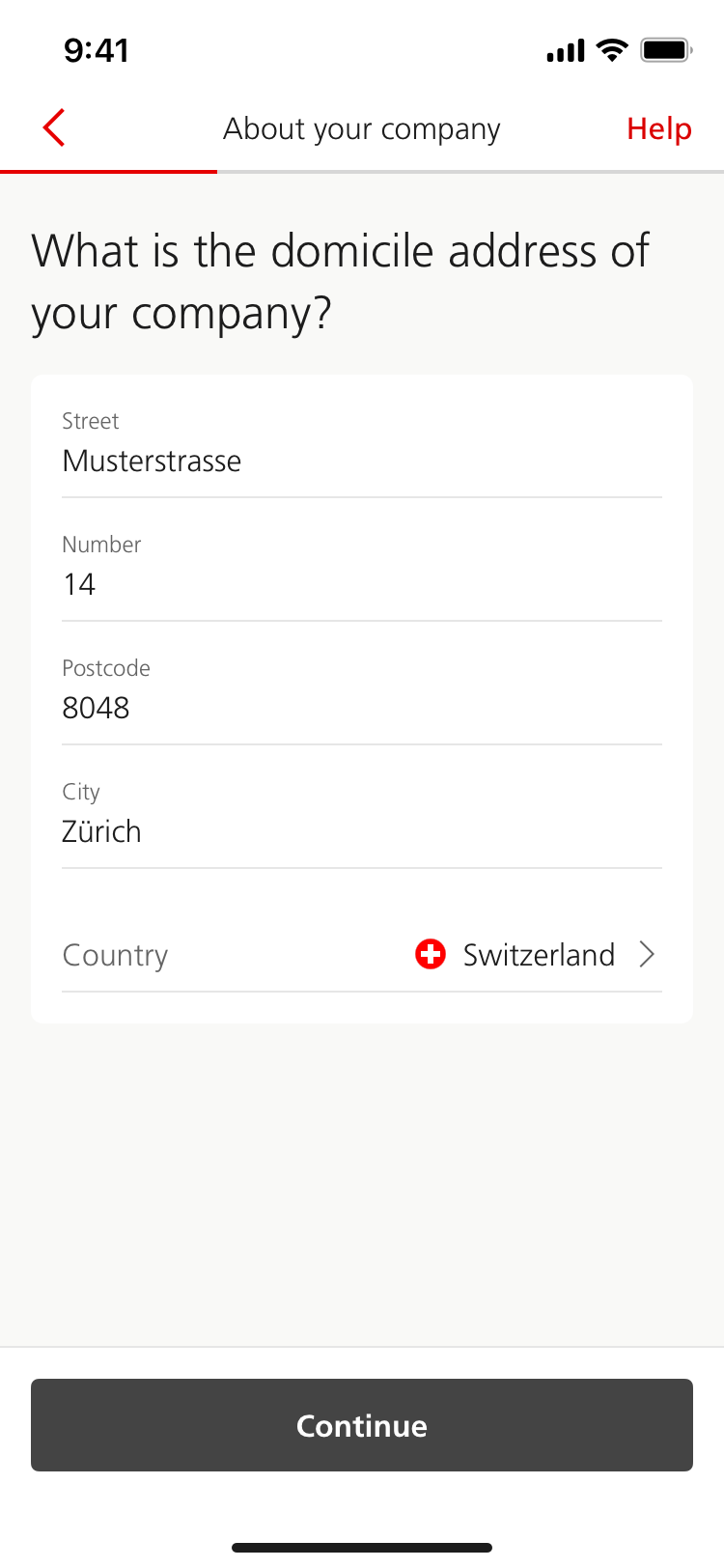
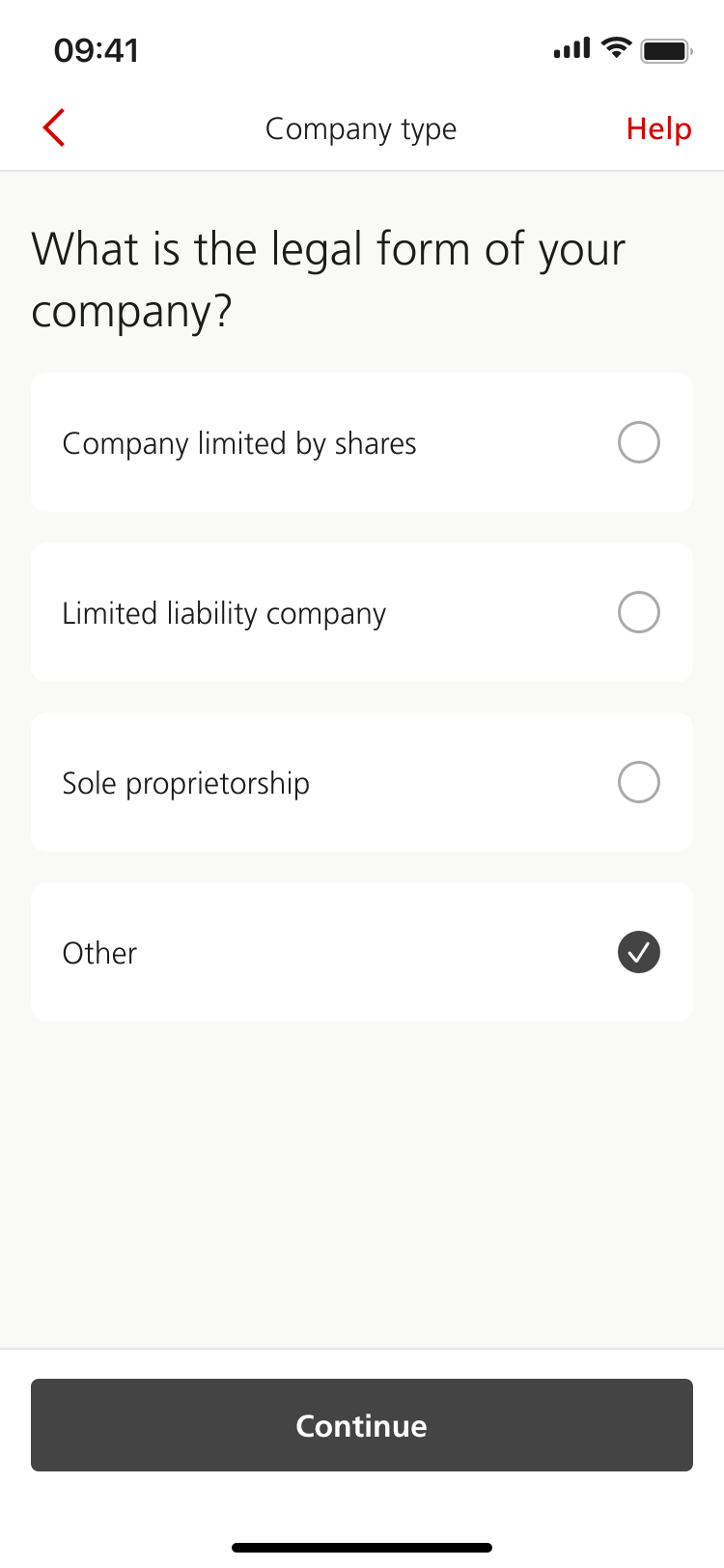
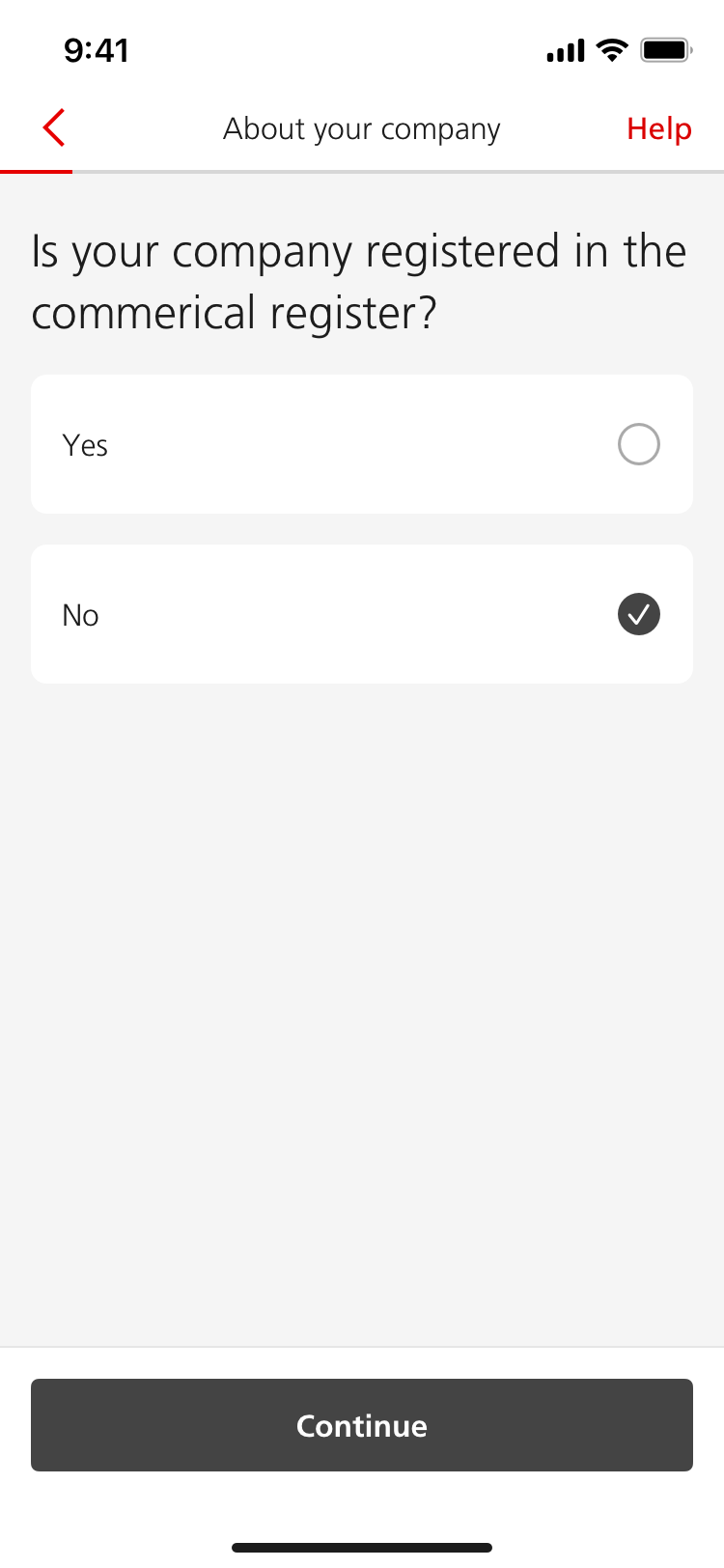
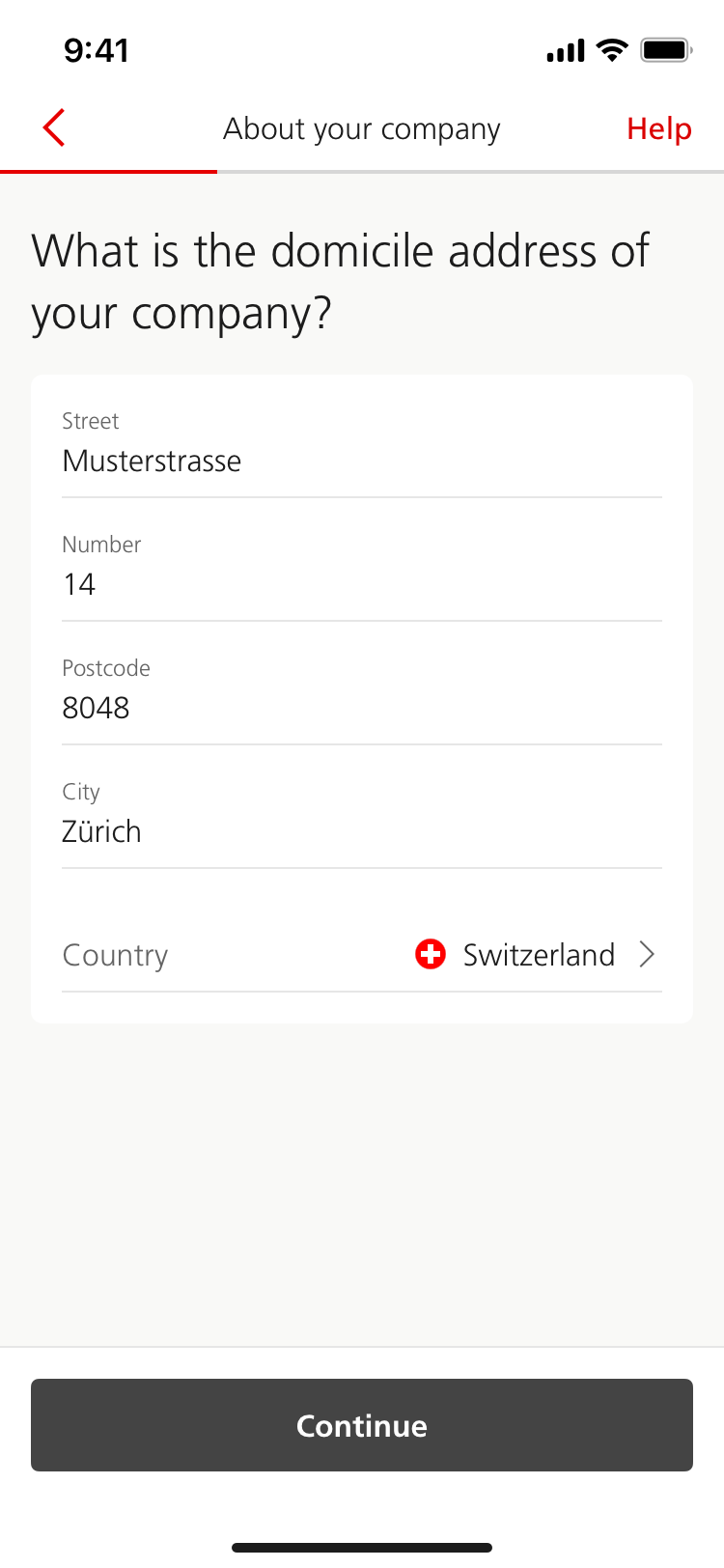
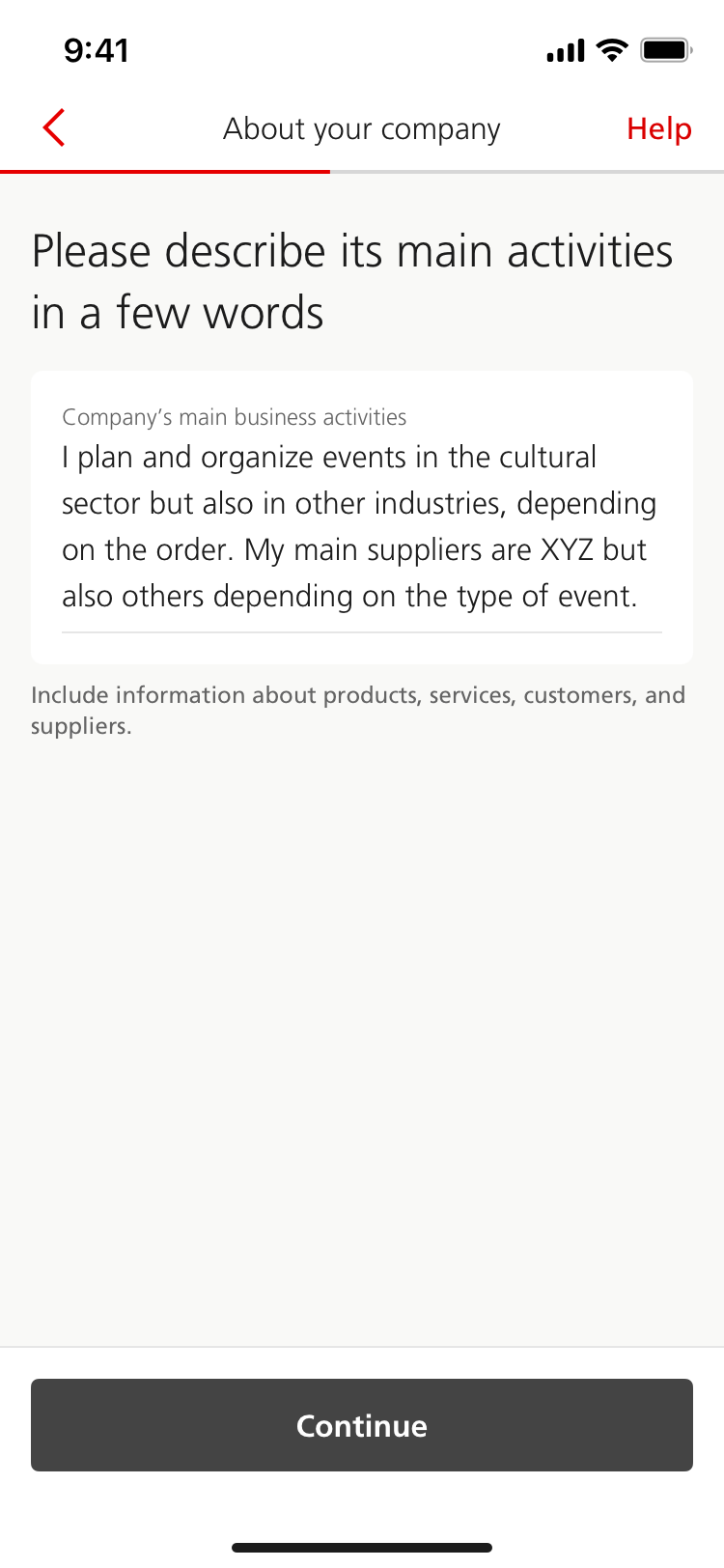
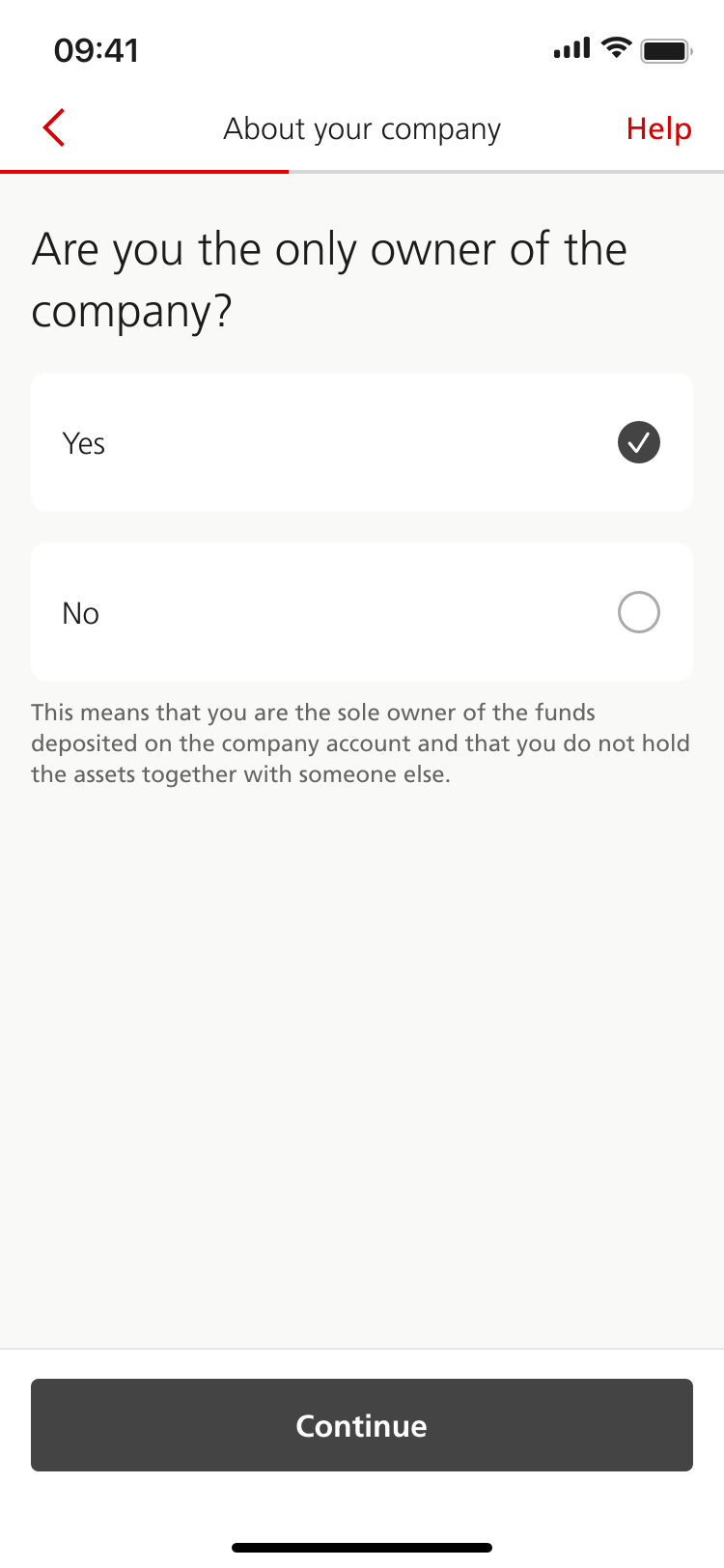
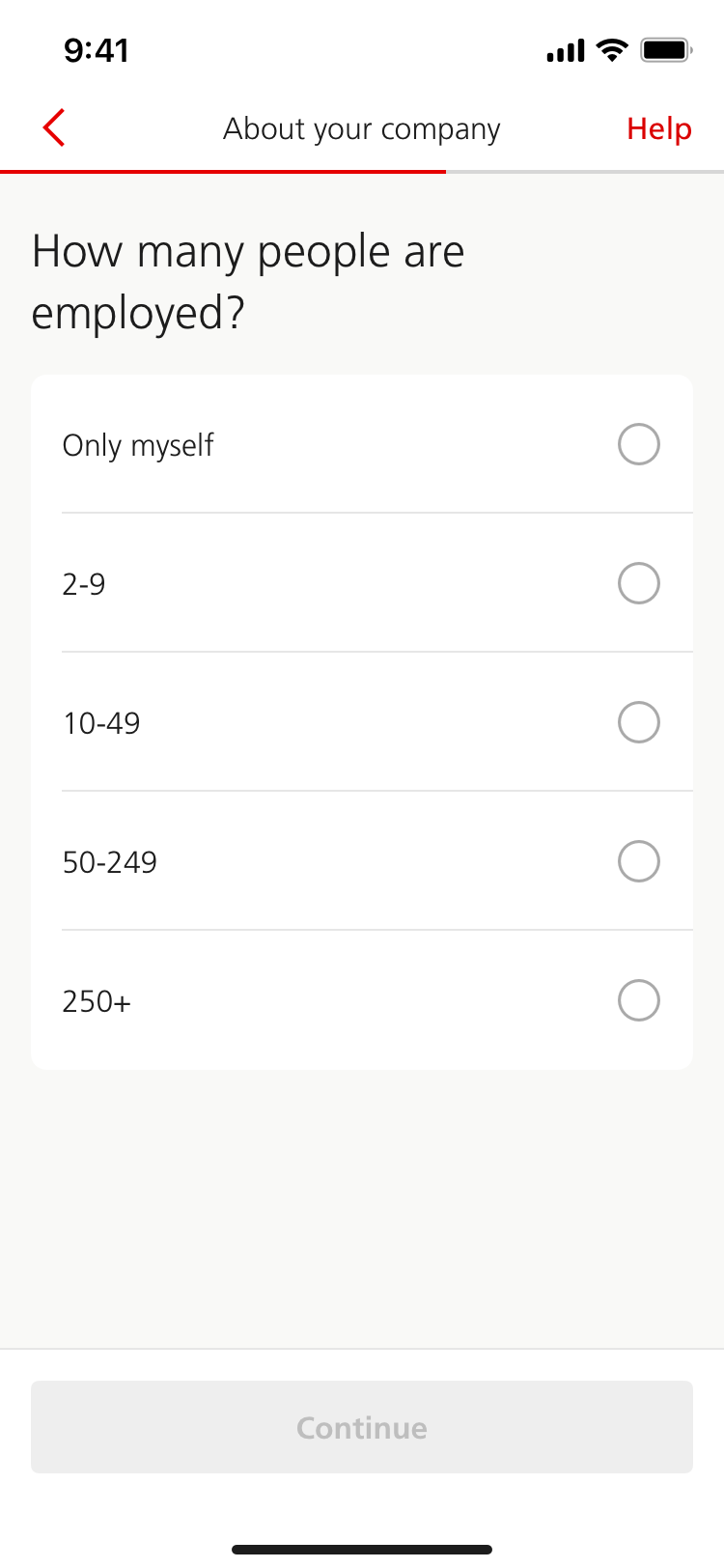
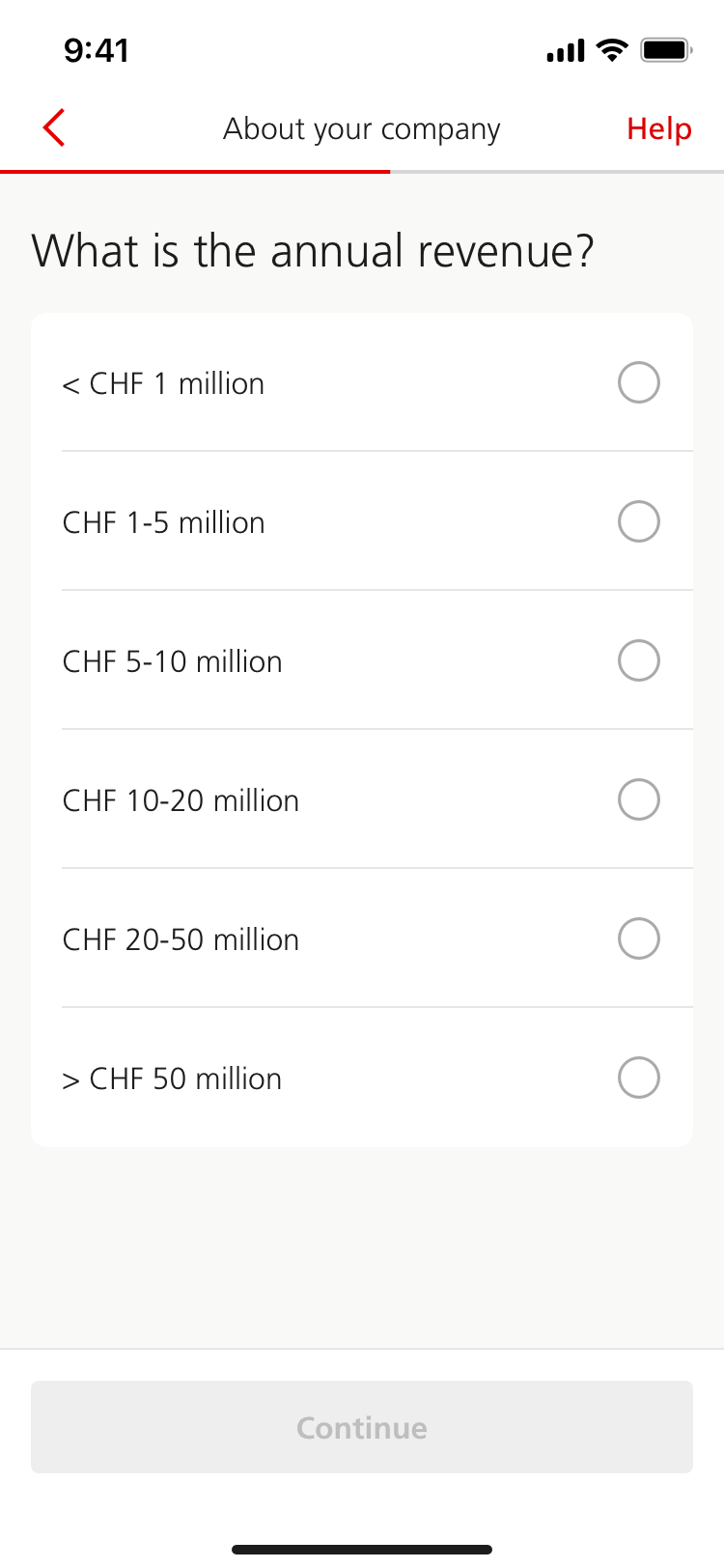
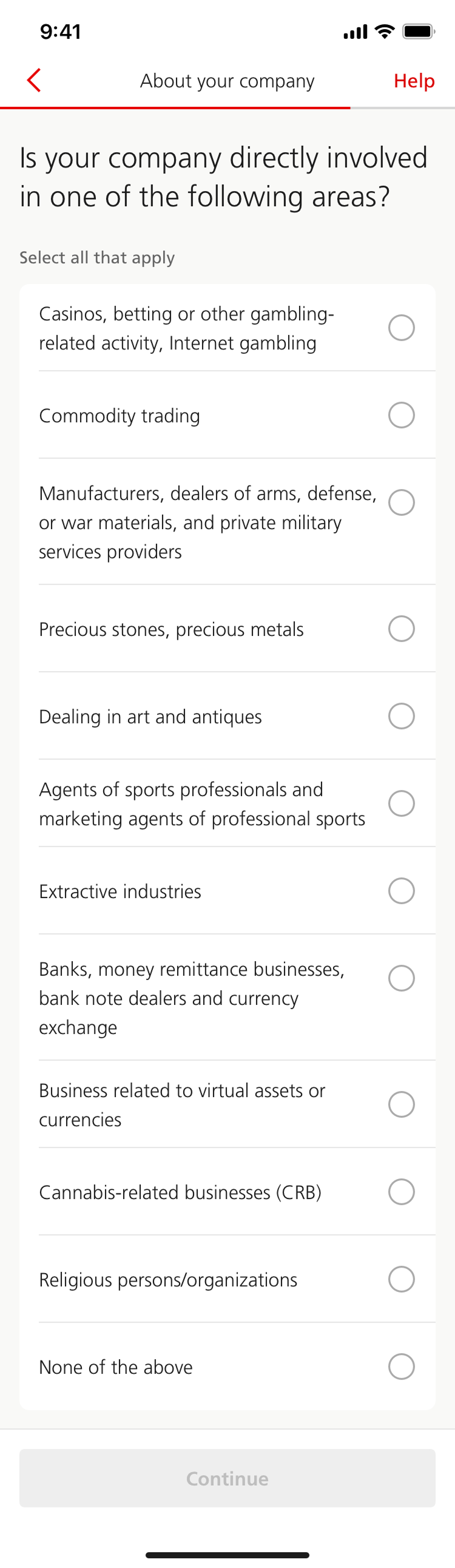
High-fidelity screens from the launched mobile onboarding experience, designed within the existing private banking design system.






Impact
Post-launch performance indicators showed:
- A substantial increase in onboarding completion rates
- A significant reduction in drop-offs during identity verification
- Fewer clarification requests and support escalations
- A meaningful reduction in overall onboarding processing time
The majority of onboarding cases were completed digitally without branch visits or postal exchange.
The redesign reduced advisor dependency, improved transparency, and established a scalable digital foundation for compliance-driven services.