Banking Support Chatbot for Mobile & E-Banking
TL;DR
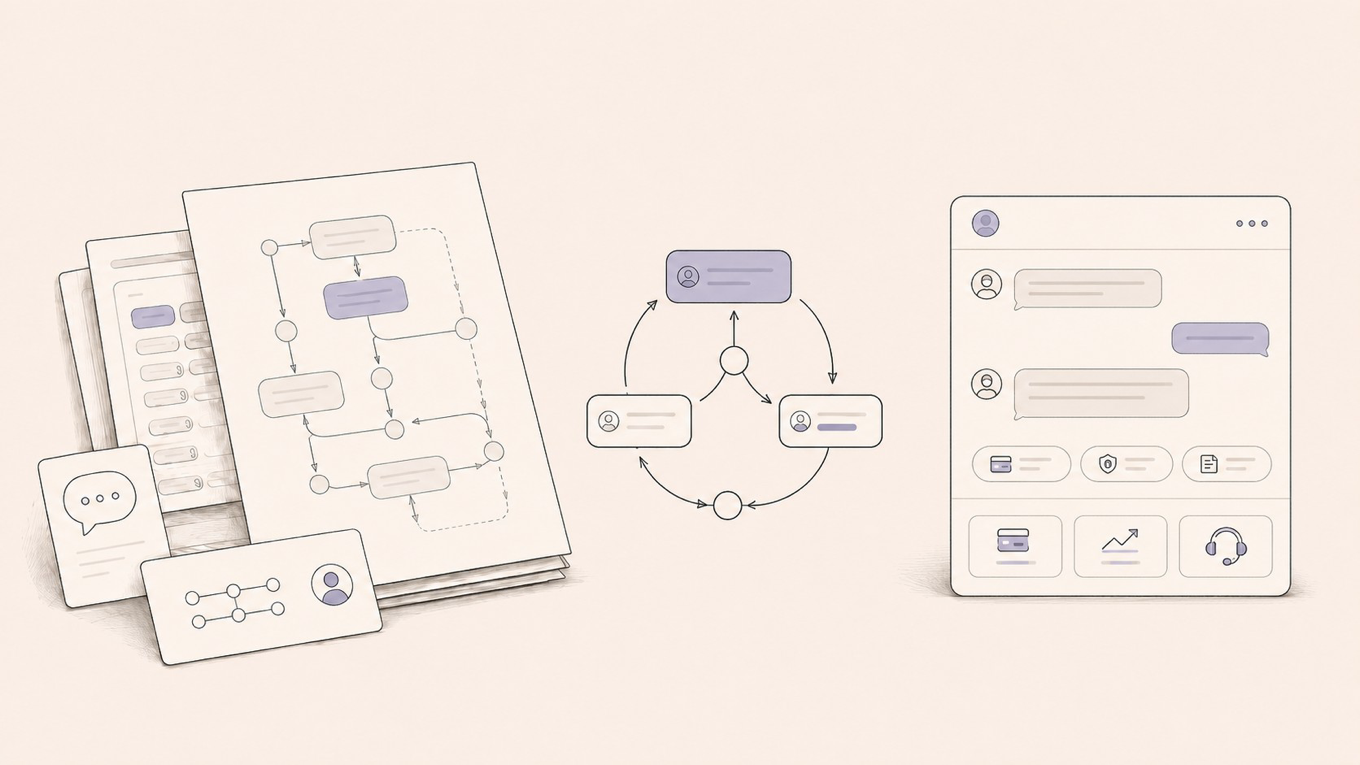
I was the sole Conversational UX Designer on a banking chatbot embedded in authenticated mobile and e-banking. I defined the full conversational experience from scratch — intent taxonomy, dialog flows, personality, tone of voice, fallback logic, and escalation strategy — across four languages and within strict financial compliance constraints.
The chatbot launched successfully and now resolves approximately one in three customer queries without human intervention, maintaining satisfaction above 4/5.
To improve self-service within digital banking, the bank introduced a chatbot embedded directly in authenticated mobile banking and e-banking. The goal was to help clients resolve common digital banking questions without contacting the support center, while maintaining strict compliance with financial regulations and privacy requirements.
I joined the project from the beginning as the sole Conversational UX Designer, responsible for defining the conversational experience, designing the chatbot's interaction model, and aligning the system with both user needs and regulatory constraints.
Exploring User Expectations
At the start of the project, I conducted exploratory user research to understand how banking clients perceive chatbots and what expectations they have when interacting with conversational support.
The research consisted of semi-structured online interviews with e-banking clients, combined with concept testing of chatbot interactions. I created several prototype dialog scenarios in Voiceflow and used them during interviews to gather feedback on interaction patterns, tone of voice, and perceived usefulness.
The study focused on three areas:
- Previous experiences with chatbots
- Expectations for banking chatbot interactions
- Preferred ways of interacting with conversational systems
The objective was to ensure that the chatbot's capabilities, behavior, and personality aligned with user expectations, while avoiding common frustrations associated with chatbots.
Designing the Conversational System
Based on these insights, I defined the intent taxonomy that structured the chatbot's capabilities. This taxonomy organized support topics into a clear conversational architecture and established how users could enter different support scenarios.
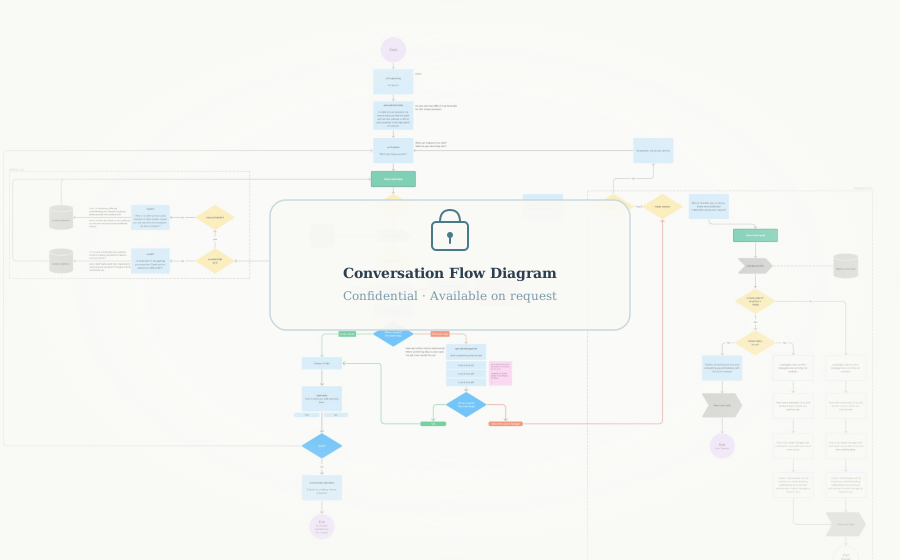
I designed the full set of conversation flows, guiding users step-by-step through common support situations in mobile and e-banking. The chatbot followed a guided support model, meaning it provided instructions and navigation assistance rather than executing financial transactions.
The conversational architecture included:
- Structured decision flows for support topics
- Consistent interaction patterns across languages
- Clear user choices to reduce ambiguity
- Contextual guidance within the banking interface
As the system evolved, the chatbot transitioned from a rule-based model to an NLP-supported interaction model. I collaborated closely with NLP engineers to align the conversational structure with intent recognition and flexible user input.
Managing Uncertainty and Escalation
A key part of the design was ensuring that the chatbot could handle situations where user requests were unclear or outside its capabilities.
I designed the chatbot's fallback and escalation framework, defining how the system should respond to misunderstood input and how users should be guided to appropriate support channels when necessary.
The design also accounted for waiting scenarios and ensured that users received clear communication about next steps when human support was required.
Tone of Voice and Multilingual Design
I defined the chatbot's tone of voice and conversational guidelines, ensuring communication remained professional, clear, and appropriate for financial services.
All messaging required alignment with legal and compliance teams, which influenced wording and interaction patterns. The chatbot supported four languages, requiring conversation flows that were structurally consistent while allowing localized phrasing and regulatory wording.
Conversational Design Documentation
As the conversational system expanded, I introduced a documentation framework to organize design artifacts and maintain consistency across teams. The documentation structured:
- Intent taxonomy
- Conversation flows
- Fallback patterns
- Escalation logic
This framework supported collaboration between product, engineering, and NLP teams and allowed the conversational system to scale as new capabilities were added.
Key contributions
- Exploratory user research — conducted semi-structured interviews with e-banking clients combined with concept testing of chatbot interactions prototyped in Voiceflow
- Chatbot personality & tone of voice — defined conversational guidelines ensuring communication remained professional, clear, and appropriate for financial services
- Fallback & escalation framework — designed how the system responds to misunderstood input and guides users to appropriate support channels
- Multilingual design — structured conversation flows for four languages, maintaining structural consistency while allowing localized phrasing and regulatory wording
- Documentation framework — introduced a system to organize intent taxonomy, conversation flows, fallback patterns, and escalation logic across product, engineering, and NLP teams
Outcome
The chatbot was successfully launched within the bank's authenticated mobile and e-banking environments, where it assists clients with digital banking questions and guidance.
Following launch, the chatbot achieved approximately 33% containment rate, resolving around one third of support conversations without requiring human intervention, while maintaining customer satisfaction above 4/5.
Because the chatbot operates within secure banking sessions, it is accessible only to authenticated clients.